
Pride flags and their meanings: every flag explained
The rainbow flag, the Progress flag, the gay men’s flag and more: what each one stands for and where it came from.
Flags are how the LGBTQ+ community says “we’re here” in a crowd, on a balcony or on a profile picture. Some are decades old, some were designed in the last few years, and each one tells a story. Here’s what the most common pride flags mean.
The rainbow pride flag
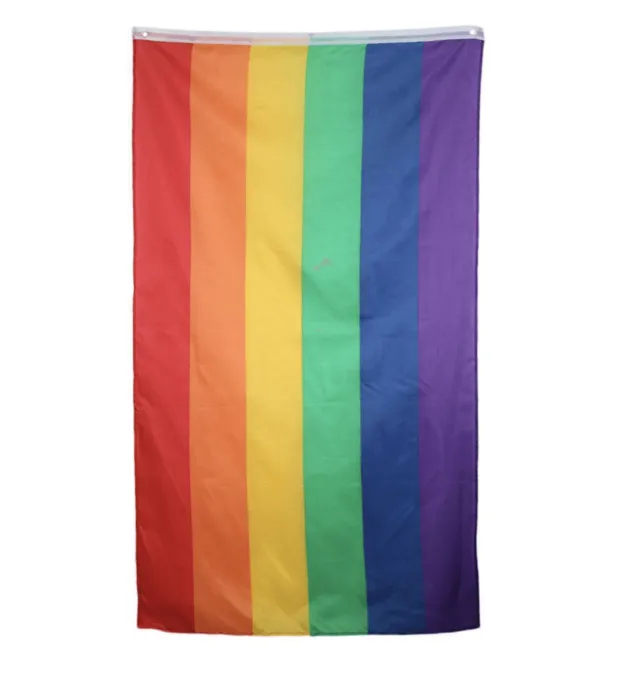
The rainbow flag was designed by artist Gilbert Baker for San Francisco’s Gay Freedom Day in 1978. His original had eight stripes, each with a meaning: hot pink for sex, red for life, orange for healing, yellow for sunlight, green for nature, turquoise for magic and art, indigo for serenity and violet for spirit.
Hot pink fabric was hard to find, and turquoise was later dropped too, which gave us the six-stripe flag most people fly today: red for life, orange for healing, yellow for sunlight, green for nature, blue for harmony and violet for spirit.
The Philadelphia and Progress Pride flags
In 2017, Philadelphia added black and brown stripes to the rainbow to recognise Black and brown LGBTQ+ people. A year later, designer Daniel Quasar created the Progress Pride flag: the six-stripe rainbow with a chevron of black, brown, light blue, pink and white, bringing in people of colour, those lost to AIDS and the trans community. An intersex-inclusive version from 2021 adds a yellow triangle with a purple circle.
The gay men’s flag (MLM)
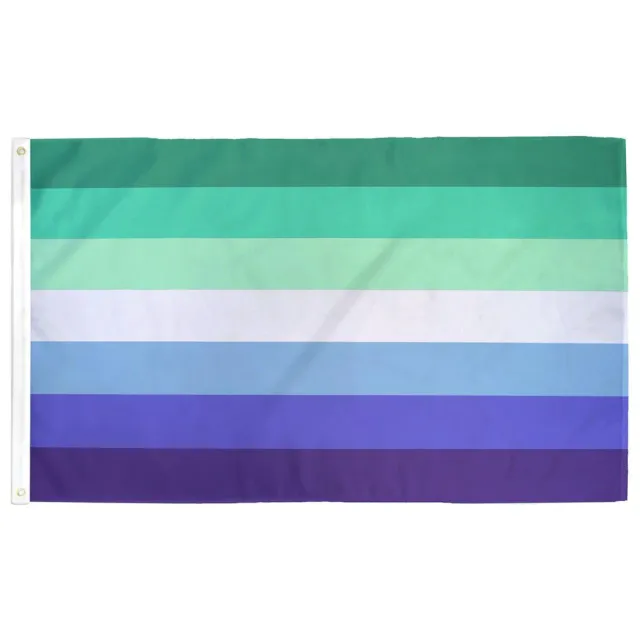
The MLM (men loving men) flag, often called the Vincian flag, was shared online in 2019. Its stripes run from greens through white to blues and violet, and it represents gay, bi and queer men who love men.
Bisexual, trans and other identity flags
- Bisexual flag (Michael Page, 1998): pink for same-sex attraction, blue for different-sex attraction, and purple where they overlap.
- Transgender flag (Monica Helms, 1999): light blue and pink, with white in the middle for people who are transitioning, intersex or non-binary.
- Lesbian flag (2018): shades of orange, white and pink.
- Pansexual flag (2010): pink, yellow and blue.
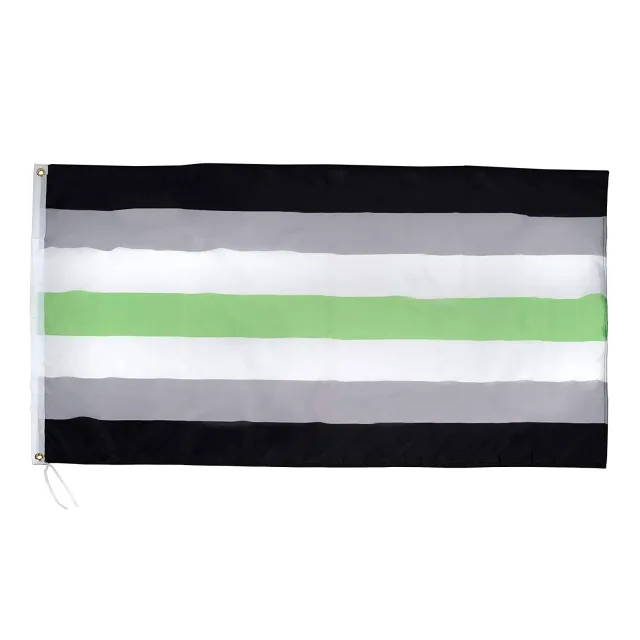
- Asexual flag (2010): black, grey, white and purple.
- Non-binary flag (Kye Rowan, 2014): yellow, white, purple and black.
Flags from gay subcultures
The bear flag, designed by Craig Byrnes in 1995, has seven stripes in fur colours from dark brown to black, with a paw print in the corner. The leather pride flag, created by Tony DeBlase in 1989, has black and royal blue stripes, a white stripe through the middle and a red heart in the top corner.
Tip: Flying a flag at home or a parade? A 90 × 150 cm flag is the classic parade size; 60 × 90 cm suits walls and windows. We compared what pride flags cost at Amazon, Walmart, Etsy and specialist makers.
Pride flags
Good questions
What do the six colours of the rainbow flag mean?
Red stands for life, orange for healing, yellow for sunlight, green for nature, blue for harmony and violet for spirit.
Who designed the rainbow flag?
Gilbert Baker, for San Francisco’s Gay Freedom Day in 1978.
What is the gay men’s flag?
The MLM (men loving men) flag, shared in 2019, with stripes of greens, white, blues and violet.